
Bathroom leaking into the next room or the flat below? Here's where it's coming from
Damp walls beside a bathroom or a stain on the ceiling below usually trace back to one of four sources. How to tell them apart and what actually fixes each.
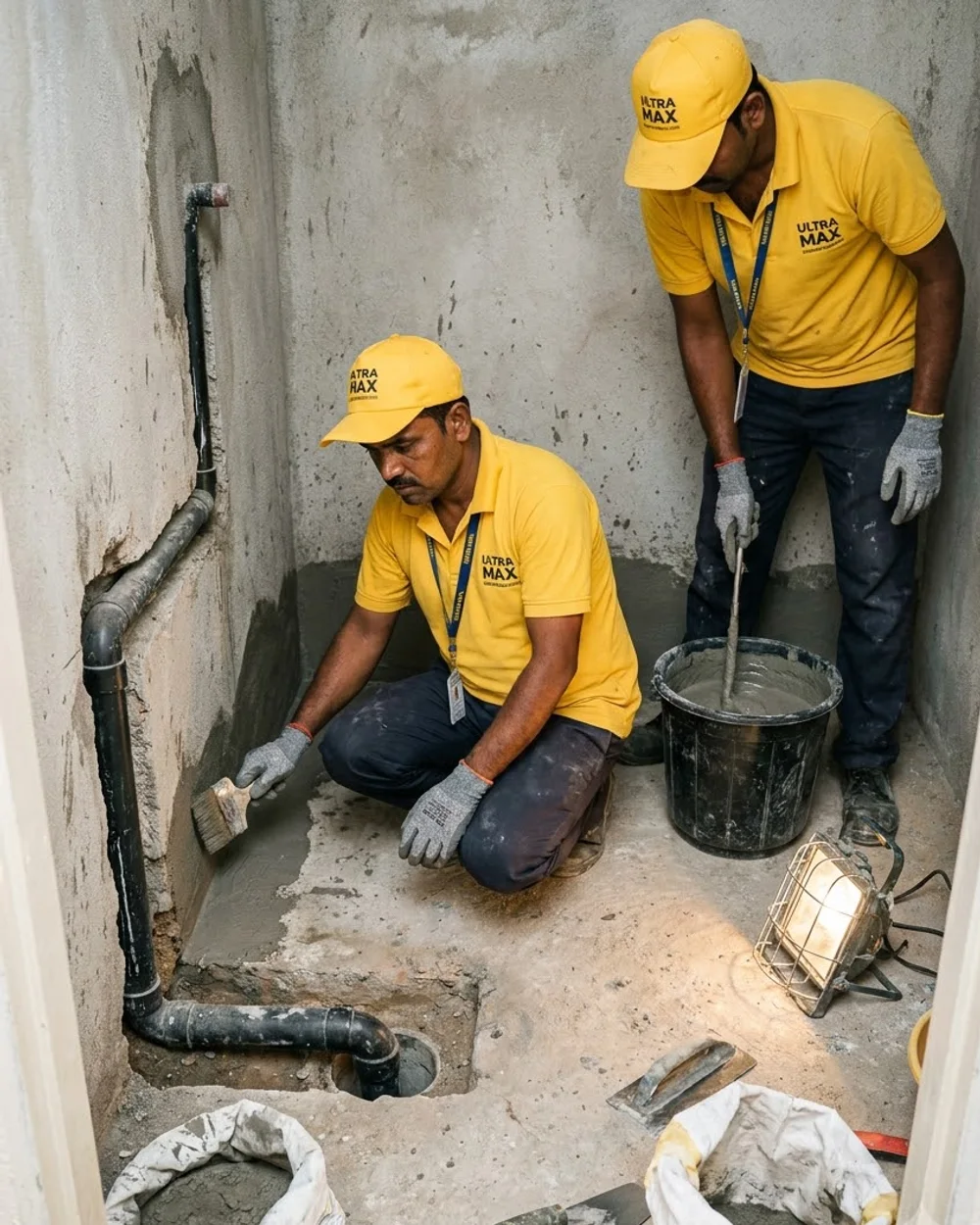
Bathroom leaks are some of the hardest problems in an apartment, because the damage almost never shows up in the bathroom itself. It shows up as peeling paint on the bedroom wall next door, a skirting that stays damp, or a brown ring on your downstairs neighbour’s ceiling. By the time anyone notices, water has usually been escaping for months.
The four usual sources
1. The tile joints. Cement grout between floor and wall tiles is porous. Over the years it cracks, crumbles and lets water through every time the shower runs. The water soaks into the bed beneath the tiles and spreads.
2. The sunken slab. Most Indian bathrooms are built with a sunken floor that holds the drain pipes, filled with brick bats or rubble and topped with tiles. If that sunken area was never waterproofed before it was filled, it becomes a reservoir. Water collects in the filling and seeps out into walls and the slab below.
3. Pipe joints inside the wall or floor. A slowly leaking concealed pipe, a loose joint at the floor trap, or a failed seal around the drain can release water continuously, even when nobody is using the bathroom.
4. The wall base. The junction where the floor meets the wall is where water sits longest. If the waterproofing doesn’t turn up the wall at that corner, water wicks into the wall and rises.
How to tell which one it is
A few simple observations narrow it down:
- Does the damp get worse right after showers, then dry a little? That points to tile joints or the wall base.
- Is it damp all the time, even after days of no use? That points to a leaking pipe under pressure.
- Is the stain on the ceiling below roughly under the bathroom floor? That usually means the sunken slab.
- Is the wall damp from the floor up to about knee height? That is often water rising from the floor-wall junction.
In practice it is often more than one of these together, which is why guessing is expensive. Moisture readings and thermal imaging show where the water is actually sitting without breaking tiles open, so the repair targets the real source.
What fixes each
- Failed grout: cut out the old joints and refill them with epoxy grout, which is non-porous and doesn’t absorb water the way cement grout does (epoxy grout vs cement grout explains the difference). For bathrooms where the only problem is the joints, this can stop the leak without removing a single tile. More on that in our tile epoxy grouting service.
- Leaking pipes: these have to be repaired first. No amount of waterproofing holds back water coming from a pressurised line.
- Sunken slab and wall base: this is the full job. The floor is opened, the sunken area is waterproofed properly, the waterproofing is carried up the walls at the junction, and each pipe opening is sealed individually before new tiles go down.
Why it gets found late
Bathroom leaks in apartments often damage someone else’s home first. The flat below sees the stain; the flat above has no idea. If you have been told your bathroom is leaking, the kindest thing for both households is to find the source quickly. A small joint problem caught early is a far smaller job than a sunken slab that has been filling for years.
Not sure where yours is coming from? Ultra Max traces the source before recommending any work. See how on our PropChk waterproofing page.
Talk to Ultra Max
We inspect first, then give you one clear plan. Serving homes and businesses across Bengaluru.
See bathroom waterproofing